Skip to content
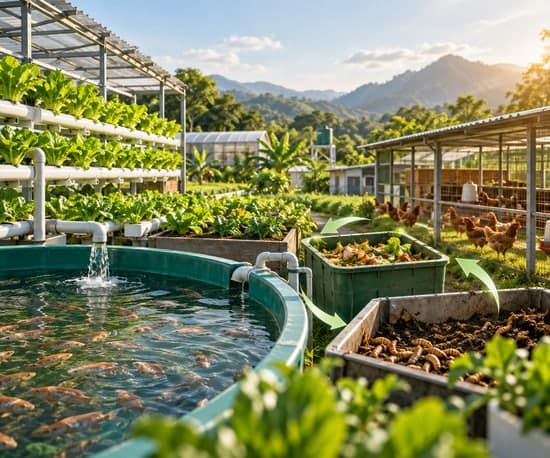
Greenhouse filled with green plants

The solution

Circular farms that report back

Each VIEM Suku Unit combines aquaponics, hydroponics and circular inputs on about 150 m² — and a low-cost sensor kit that keeps the loop healthy over the suco's new connection.

Three linked systems

Fish, plants and waste — one shared water

Orange and silver fish in water01 · Aquaponics

Fish and plants share one water

Aquaponics

A 2,000-litre tank holds tilapia. Their water flows through a biofilter where bacteria turn ammonia into nitrate, then through grow beds of leafy greens, herbs and fruiting crops. Clean water returns to the fish — no chemical fertiliser needed.

Vertical hydroponic tower with plants growing inside02 · Hydroponics

Fast, high-value greens

Hydroponics

NFT (nutrient film) channels under a shade-net house grow lettuce, pak choi, kangkung and basil in 4–6 weeks, fed partly by aquaponic water and partly by organic liquid fertiliser brewed from compost.

Hands holding rich brown soil03 · Circular inputs

Waste becomes feed and fertiliser

Circular inputs

Organic waste feeds black soldier fly larvae — high-protein fish and poultry feed. Their frass and plant trimmings become compost. Rain is harvested from the roof and a small solar array with battery runs the pumps and sensors.

The VIEM loop

Every output of one stage is an input to another

Nothing leaves the farm as waste. Rain and sun power the loop; the harvest is graded and bought back by VIEM.

Water flowing from the fish tank to grow beds, with compost and larvae bins feeding back into the loop
  • Input
    Market & kitchen waste
    Process
    Black soldier fly larvae composting
    Output
    Protein larvae and frass
    Goes to
    Fish feed and compost
  • Input
    Fish waste (ammonia)
    Process
    Biofilter bacteria
    Output
    Nitrate nutrient
    Goes to
    Grow beds and NFT channels
  • Input
    Plant trimmings and roots
    Process
    Compost and liquid brew
    Output
    Organic fertiliser
    Goes to
    Hydroponics and local farmers
  • Input
    Rain and sun
    Process
    Roof capture and solar PV
    Output
    Water and power
    Goes to
    Tanks, pumps and sensors
  • Input
    Harvest
    Process
    Grading and VIEM buy-back
    Output
    Vegetables and fish
    Goes to
    Schools, hotels and markets

Sensing on the farm

Offline-first by design — a few kilobytes an hour

A full cloud IoT platform with live streaming fails on shared satellite links. So the controller runs safety rules on the spot and uploads small compressed batches when the link is available.

The sensor kit

ESP32 controller · waterproof probes · battery-backed

  • Water & air temperatureTilapia thrive at 24–30 °C; heat stress shows first in the tank.
  • Dissolved oxygenThe fastest killer — a stopped aerator can kill fish within hours.
  • pHKeeps biofilter bacteria, fish and plants in the same happy range.
  • EC / TDSHow much nutrient is dissolved for the plants.
  • Tank levelCatches leaks, blocked drains and empty rain tanks early.
  • HumiditySignals dry-season stress and leaf-disease risk in the shade house.
  • Pump currentDetects a pump that is switched on but not actually running.

LoRa to the suco gateway

Long-range, low-power radio carries readings from the tank to a small gateway at the suco office — no Wi-Fi at the farm.

Shares the Vorakai link

The gateway uses the suco's satellite connection. VIEM runs support — not Vorakai.

30 days stored locally

When the link is down for days, nothing is lost: the controller keeps a month of readings and syncs later.

Safety rules run on site

Low oxygen switches on the battery-backed aerator and sounds a loud buzzer — with or without internet.

PowerSolar array + battery runs pumps and sensors

Data footprint≈ 50 bytes per reading, sent in compressed batches

Link failureSMS fallback and printed response guide

Tulun VIEM

Asistente agrikultura · online

Alerta · Suku Unit 01

Oksijéniu tun (4.6 mg/L). Haree pompa ar agora.

Oxygen is low. Check the air pump now.

06:42

Tanba sa mak alfase sira-nia tahan kinur?

Why are the lettuce leaves turning yellow?

06:51

Tahan kinur bele tanba nutriente ki'ik ka pH aas liu. Sukat EC no pH, depois haree lista foto.

Yellow leaves can mean low nutrients or high pH. Measure EC and pH, then follow the photo checklist.

VIEM Manual §4.2 · Nutrients

1 · Haree lista foto 2 · Bolu agrónomu
Illustrative Tulun VIEM chat. Alerts are rule-based and always fire; answers come only from the vetted manual.

Tulun VIEM · Tetum farm assistant

Helpful, honest, and accountable

Every AI answer is logged and reviewed weekly; wrong answers become manual updates. The VIEM operations manager is accountable for advice given.

Tulun VIEM may

  • Explain sensor alerts and first-response steps
  • Answer from the vetted VIEM manual, with sources
  • Log harvest weights and send buy-back orders
  • Escalate to a named VIEM agronomist

Tulun VIEM may not

  • Recommend chemicals, medicines or pesticides
  • Invent answers outside the manual
  • Change prices or payments
  • Close an alert without human confirmation

If the model or the link fails, the service degrades step by step

  1. 1

    WhatsApp assistant

    Tetum-first answers from the vetted manual.

  2. 2

    Numbered SMS menu

    Works on any phone when data is down.

  3. 3

    Laminated guide on site

    Printed first-response steps at every tank.

  4. 4

    Phone call to the Hub

    A VIEM agronomist is always accountable.

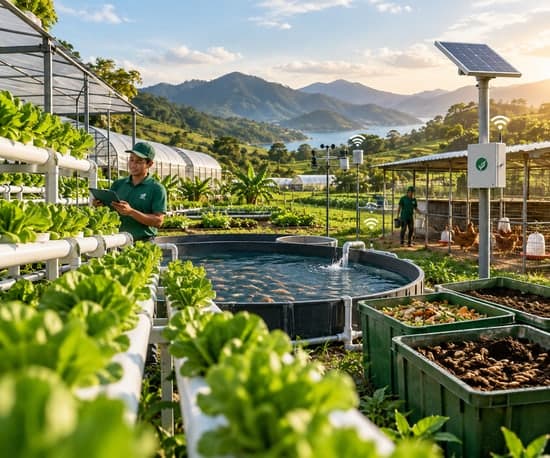
Operator checking sensor readings on a tablet beside an aquaponic tank and solar-powered monitoring pole

The VIEM dashboard

Scattered small farms, one reliable supplier

At the Hub, a lightweight dashboard shows every unit's health, harvest forecast and buy-back orders — so VIEM can plan collection routes, promise weekly volumes to buyers and spot which cooperatives need a field visit.

  • Fleet health across every unit
  • Live sensors with alarm bands
  • Pumps, aeration, irrigation & circulation
  • Automation rules with hysteresis
  • Tetum alerts that need a human to close
  • Harvest log, buy-back & forecast
Open the live demo

Alternatives we considered

Why this design — and not the obvious ones

  • Soil greenhouses only

    Rejected as the core

    Cheaper to build, but still depend on soil fertility and far more water, and produce no protein. Kept for Hub nursery crops.

  • Hydroponics with imported mineral nutrients only

    Rejected

    Simpler to run, but ties every farm to imported inputs and breaks the circular model.

  • Full cloud IoT platform with live streaming

    Replaced

    Rich data, but fails on shared satellite links and outages. Replaced by offline-first local rules and small batch uploads.

  • Donated units to communities

    Replaced

    Fast to launch, but past donor units were abandoned once support ended. Replaced by cooperative ownership, lease repayment and guaranteed buy-back.

Vorakai Konekta Challenge 2026

Read the full proposal — every assumption, risk and number.

Eleven pages covering the circular design, offline-first sensing, Tulun VIEM, unit economics, rollout, failure modes and how we adapt when constraints change.

Preview it online and see how it answers the judging criteria
Vorakai Konekta Challenge 2026Timor-Leste

VIEM Konekta Farms: connected circular hydroponic & aquaponic hubs

Fish feed the plants, waste feeds the fish, and the suco's new connection keeps the loop alive.

AI & Data track